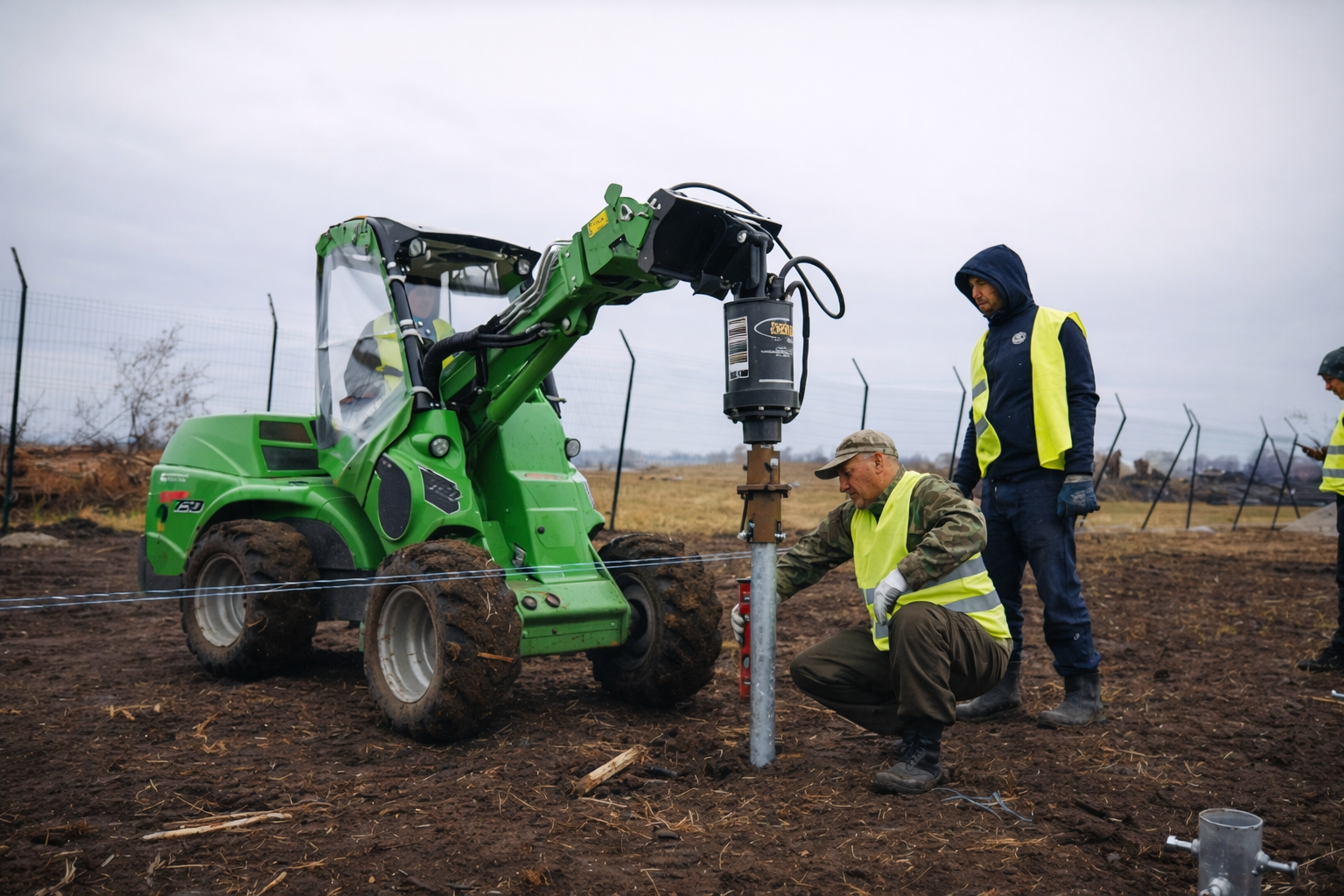
“Calculating” Means Eliminating Risks
Calculating a foundation, optimizing it for a specific structure and site conditions, is the work of a structural engineer where there is no room for assumptions. The main goal of the calculation is to eliminate the risks of settlement, deformation, and failure of both the foundation and the entire building.
It is important to emphasize the word “reliable”: a proper foundation is not just one that “stands,” but one that performs predictably throughout the building’s service life.
Step 1. Engineering-Geological Survey
No correct foundation calculation begins with the choice of piles or installation scheme. It starts with an engineering-geological survey of the construction site.
This stage is necessary to answer basic questions:
- What types of soil are present on the site, and how are they layered?
- Which soils are load-bearing?
- How do the soils respond to loads and how might they behave during operation?
Without geological data, any figures in the project are only approximations, not an engineering calculation.
Step 2. Load Collection and Calculation
The second step is collecting and calculating the loads the foundation must transfer to the soil. This includes not only the “weight of the building” but the full range of influences the structure will experience over the years.
The structural engineer usually considers:
- The weight of the structure itself (framework, roof, floors);
- Snow loads on the roof;
- Operational loads: people, furniture, equipment, machinery on the floors.
The more accurately these data are collected, the more precisely the required number of supports and their placement are determined.
Step 3. Transfer of Loads to the Foundation
Once the building loads are defined, they are “transferred” to the foundation—forming a calculation scheme that shows:
- What portion of the total load the foundation bears;
- How the load is distributed among the supports;
- Which zones require reinforcement (based on the building geometry or structural behavior).
At this stage, not only the number of screw piles is determined but also the logic of their placement: spacing, grouping, and areas of increased loads.
Step 4. Calculation Based on the Load-Bearing Capacity of Each Pile
A screw pile foundation is calculated based on the load-bearing capacity of each pile. The engineer must confirm that:
- Each pile can bear the design load in the specific soils;
- Collectively, the piles provide sufficient capacity for the entire structure with the necessary safety margin;
- The geometry of the foundation field corresponds to the structural scheme.
This combines two key data sets:
- Geology (how soils respond to loads);
- Building loads (the forces that need to be transferred to the ground).
As a result, it becomes clear how much weight the foundation will carry and how the soil on the site will handle this load.
Practical Outcome: What a Correct Calculation Provides
A correct calculation of a screw pile foundation gives the client not an “approximate scheme,” but a predictable result:
- Optimal number of supports without overuse;
- Stable foundation geometry;
- Minimized risks of settlement and deformation;
- Clear engineering logic for the solution.
For the engineer, this means a controlled project; for the client, predictable timelines and operational reliability.
Expert Conclusion PILLAR
A screw pile foundation is not a set of piles “according to a standard scheme,” but the result of an engineering calculation based on two foundations: geology and loads.
PILLAR’s experience shows that when this data is collected correctly, the calculation allows the creation of a foundation system that performs predictably, does not require “extra” piles for safety, and ensures the structure’s reliability for its entire service life.