Installation as a Key Stage of Foundation Performance
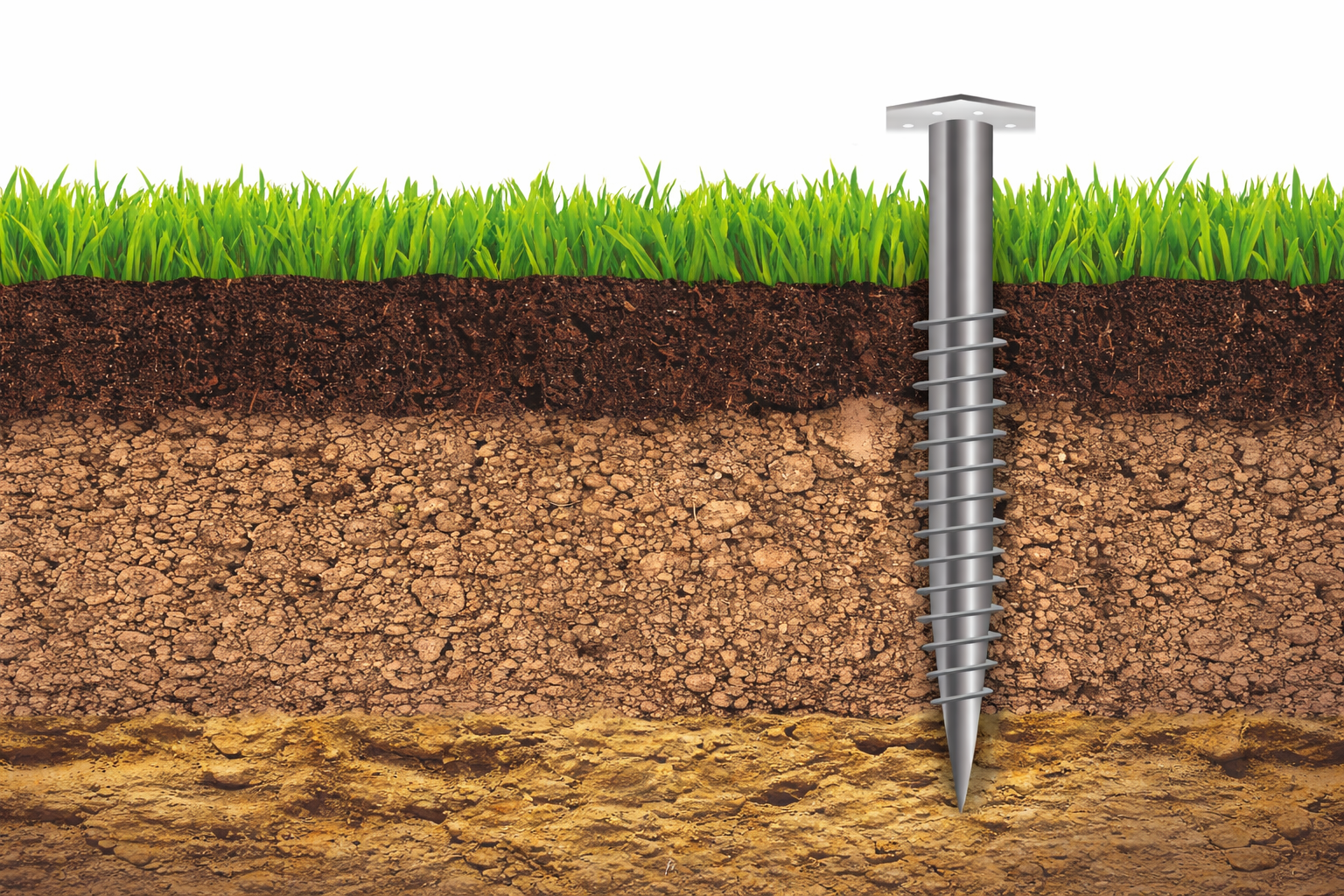
Even a correctly designed screw pile foundation can lose its effectiveness if the installation technology is violated. It is during the screwing stage that the actual interaction of the pile with the soil is formed, its position is controlled, and the design bearing capacity is achieved.
Therefore, installing screw piles is not a mechanical operation but a controlled engineering process, where every detail matters.
Control of Geometry During Installation
Regardless of the installation method, the key parameters remain the verticality of the pile and the accuracy of its position in plan.
In practice, the following control methods are used:
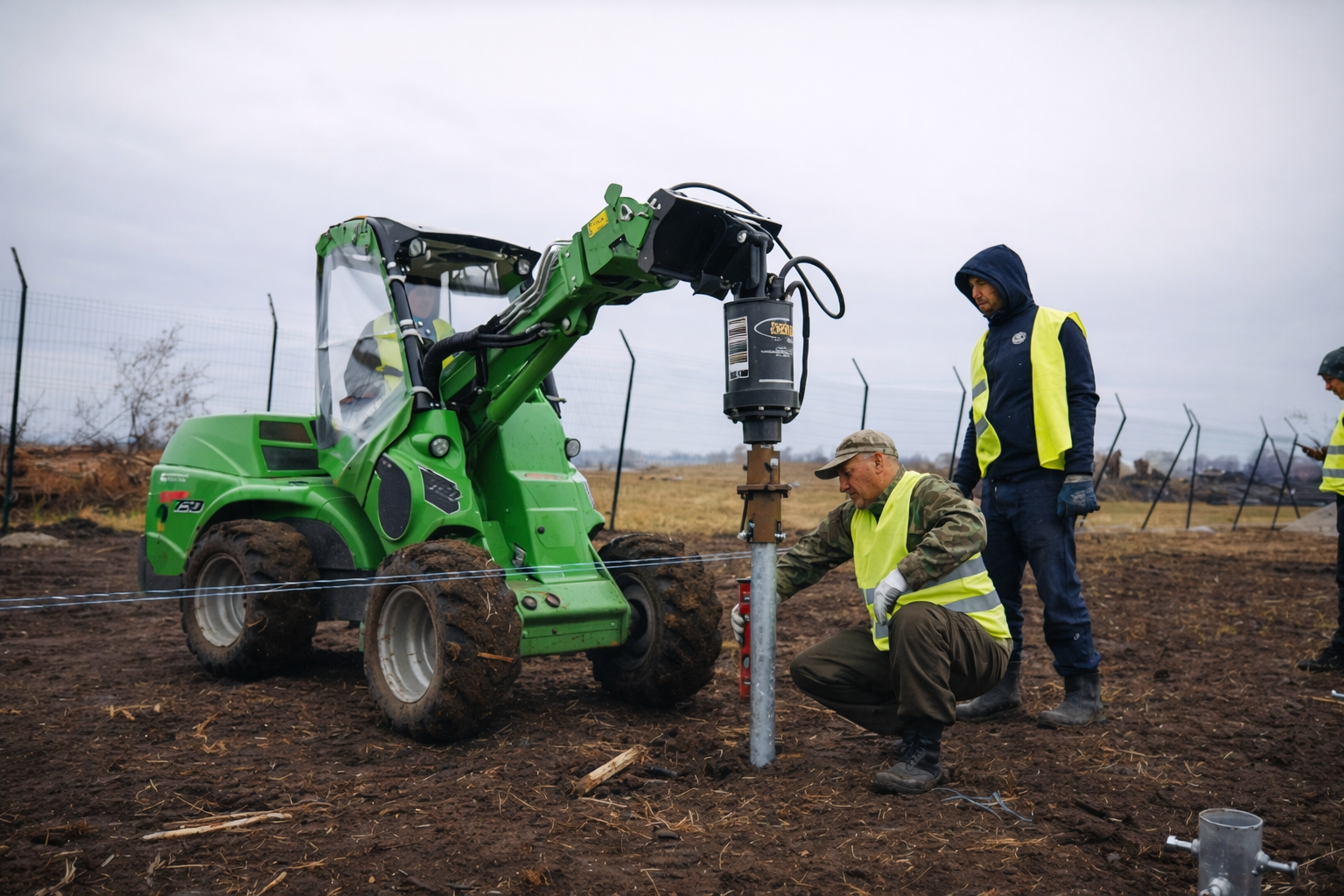
- The vertical level of the pile is checked with a tubular level fixed directly on the shaft.
- The horizontal level and height marks are checked using a taut string or an optical or laser level.
These tools ensure precise geometry of the foundation grid even on complex terrain.
Methods of Screw Pile Installation
In practice, there are three main methods of screw pile installation, chosen depending on the volume of work, soil type, and site accessibility:
Manual installation.
Performed using levers and simple mechanical devices. Suitable for small projects and short piles but requires significant physical effort and time.
Electro-mechanical installation.
Performed using an electric pile driver. Essentially similar to manual installation, with the only difference being the source of force. This method increases work speed and reduces strain on the installation team.
Hydraulic installation.
Performed using hydraulic equipment mounted on cranes, forklifts, tractors, or self-propelled drilling rigs. This is the most efficient method in terms of time and volume. It allows the installation of screw piles up to 7–8 meters long, but requires sufficient site accessibility for such machinery.
What Happens When a Screw Pile Hits a Rock
Encountering rocky inclusions is a typical situation during installation, especially on sites with heterogeneous geology. The reaction of the screw pile depends on the size of the rock.
If the rock is fist-sized, the screw pile generally displaces it during screwing and continues to the design depth. This is due to the shape of the tip and the screw section, which allow working around small obstacles without losing stability.
When a Rock Becomes an Engineering Factor
A different situation occurs when a screw pile hits a rock larger than a car wheel, especially at a depth of two-thirds of the design length.
In this case, an engineering solution is applied:
- Screwing is stopped.
- The pile head is trimmed.
- The head is welded at a new height corresponding to the design elevation of the foundation.
This preserves the geometry of the foundation grid without risking damage to the pile or loss of its bearing capacity.
Why Rocks Are Not a “Disaster” for Screw Piles
Unlike concrete foundations, where rocky inclusions often require full excavation rework, screw piles allow flexible adaptation to real soil conditions.
As a result:
- Installation does not stop completely.
- There is no need for large-scale earthworks.
- The foundation adapts to the site geology without losing functionality.
PILLAR Expert Conclusion
Encountering a screw pile with a rock is not an emergency but a planned scenario considered during installation. It is important not to force the pile at any cost but to apply the engineering solution appropriate to the conditions.
PILLAR’s experience shows that controlling geometry, choosing the correct installation method, and understanding soil behavior allow screw pile installation even in challenging conditions — predictably, safely, and with guaranteed results.