Why the foundation is a key element of a frame house
Frame houses are known for their light weight, fast construction, and flexible layouts. However, these advantages can also lead to mistakes when selecting a foundation.
An insufficiently rigid or improperly calculated foundation can cause:
- uneven settlement;
- tilting of the frame;
- deformation of walls and floors;
- loss of the building’s thermal insulation properties.
Therefore, a foundation for a frame house must provide not only load-bearing capacity but also maintain the stable geometry of the entire structure throughout its service life.
Characteristics of loads in frame structures
From an engineering perspective, a frame house has a specific load scheme:
- relatively low self-weight;
- concentrated loads at support points;
- sensitivity to horizontal and wind forces;
- foundation stiffness directly affecting structural stability.
Unlike massive masonry buildings, frame structures do not “compensate” for foundation deformations with their weight. Even minor shifts in the foundation can significantly affect the building.
For this reason, precise installation and predictable foundation performance are particularly important for frame houses.
Why screw piles are an effective solution for frame houses
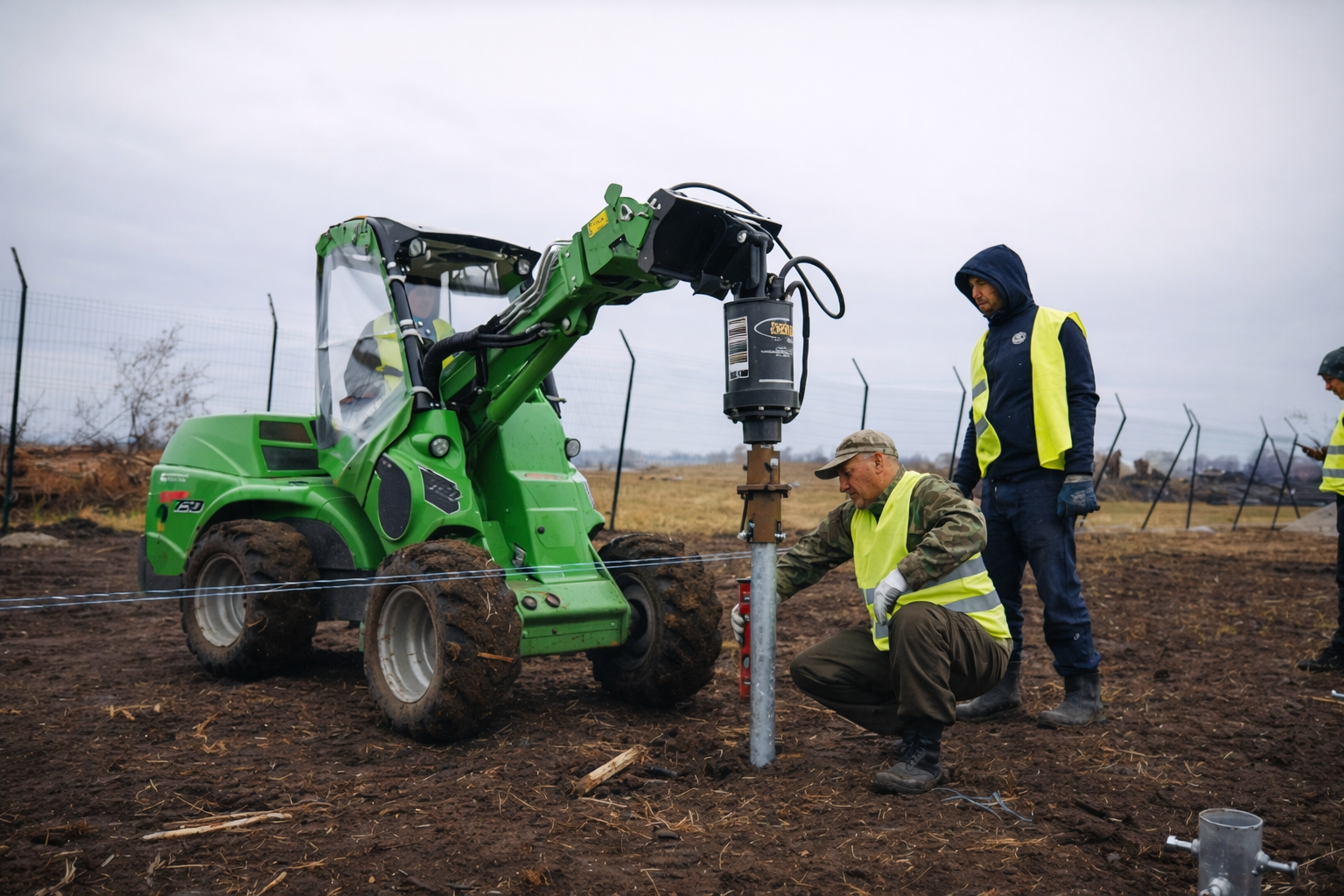
Foundations on screw piles meet the key requirements of frame construction:
- minimal soil disturbance;
- controlled load-bearing capacity;
- high installation accuracy;
- no “wet” processes.
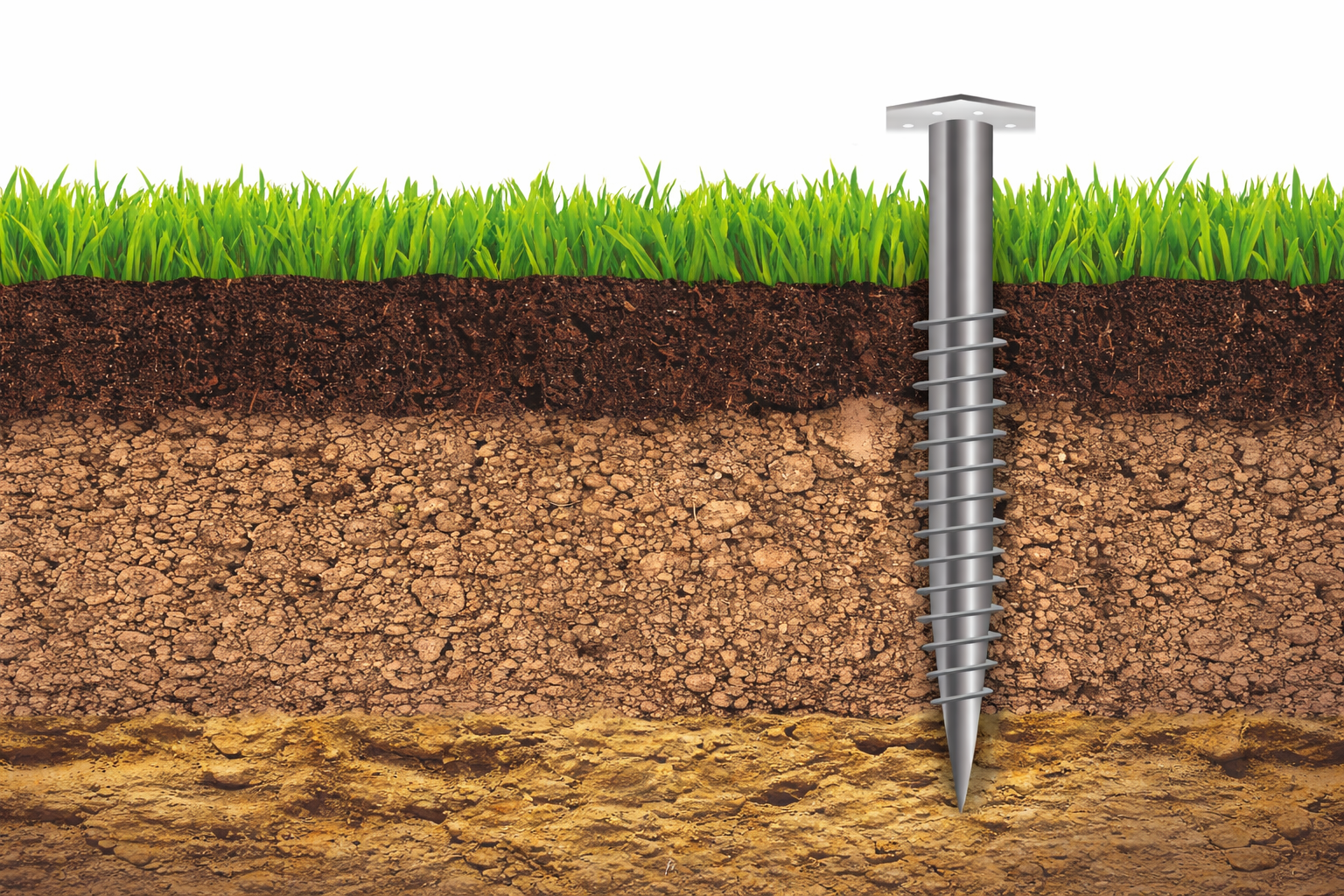
A screw pile works not by weight but through mechanical interaction with the soil. During installation, it compacts surrounding layers, forming a stable supporting zone.
This allows achieving the design load-bearing capacity immediately after installation—without waiting for concrete to cure or technological pauses.
How a screw pile foundation works in a frame house
In frame construction, the foundation performs multiple functions:
- bears vertical loads;
- resists wind and seismic forces;
- provides spatial rigidity;
- establishes accurate geometry for the grillage (rostverk).
Screw piles transfer loads along the shaft through the blades. As a result:
- stress concentrations in the upper soil layers are reduced;
- resistance to settlement is increased;
- all supports work uniformly.
For frame houses, this is especially important because even minor differences in settlement can cause structural tilting.
How to select screw piles for a frame house
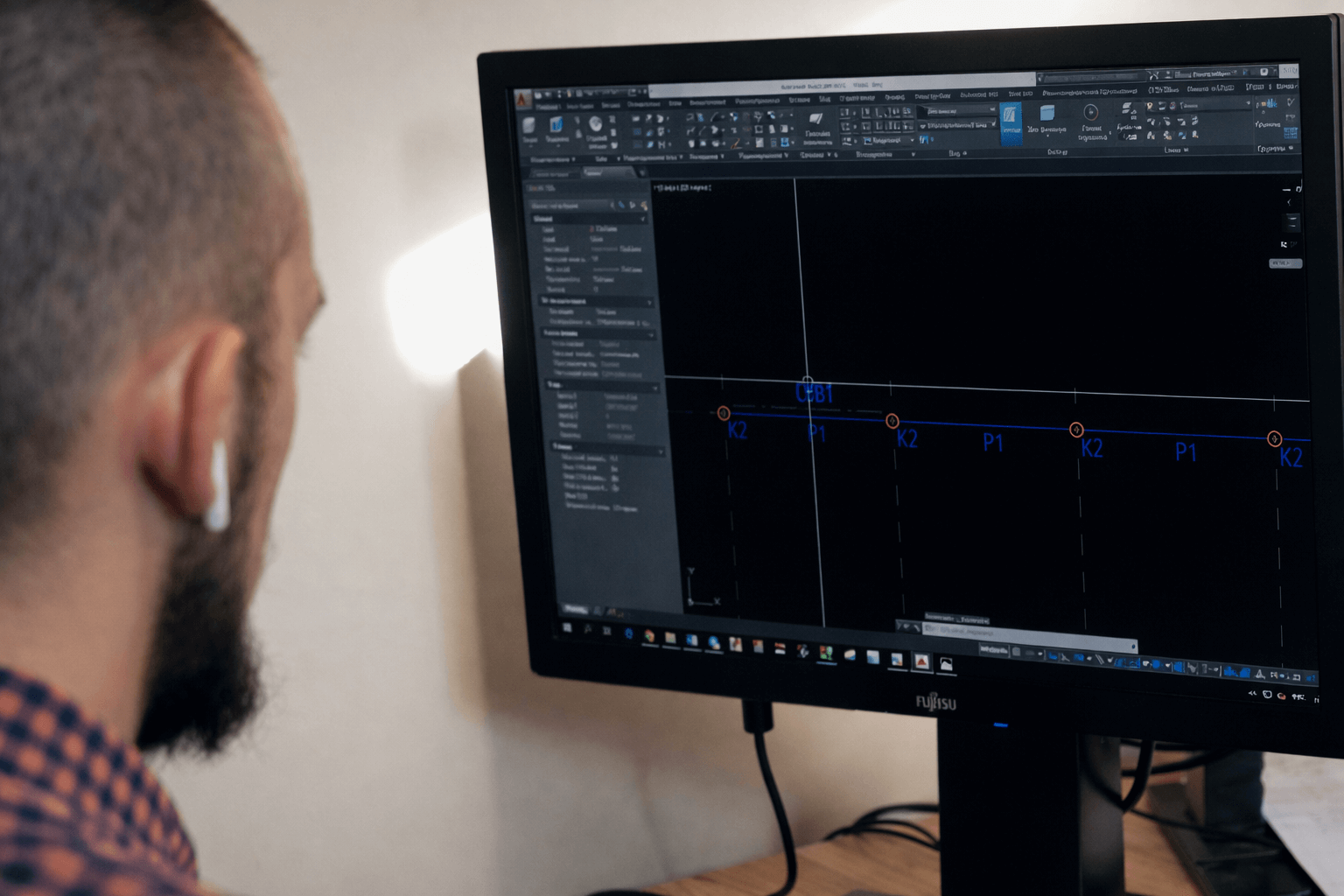
Proper foundation selection always starts with an engineering analysis. Key parameters include:
- Site geology
Soil type, groundwater level, and weak soil layers directly affect the choice of pile diameter and length. - Design load
Consider:- house area;
- number of floors;
- roof type;
- snow and wind loads;
- internal loads.
- Pile spacing
Optimal distance between screw piles ensures uniform load distribution and foundation rigidity. - Type of grillage (rostverk)
Wooden, metal, or combined grillage influences the type of pile heads and installation scheme.
A comprehensive approach helps avoid material overuse and ensures long-term durability.
Advantages of screw piles in frame construction
A screw pile foundation provides practical benefits for a frame house:
- installation in 1–2 days;
- year-round installation;
- no earthworks;
- clean installation without landscape damage;
- possibility of dismantling or reconstruction;
- precise leveling.
This makes screw piles an optimal solution for both private homes and series-built cottage projects.
Common mistakes when choosing a foundation
Typical mistakes include:
- selecting piles without geological data;
- focusing only on cost;
- ignoring horizontal loads;
- incorrect pile spacing;
- using standard schemes without adaptation.
In frame construction, these mistakes quickly lead to tilting and structural deformation.
Expert conclusion from PILLAR
A screw pile foundation for a frame house is not a simplified solution but a full-fledged engineering system designed according to precise physical principles.
PILLAR’s experience shows that a properly designed and installed screw pile foundation provides:
- stable load-bearing capacity;
- accurate building geometry;
- predictable structural behavior;
- reduced construction time.
For modern frame houses, where reliability, speed, and engineering responsibility are essential, screw piles are the optimal foundation choice.