Why carports are becoming a full-fledged part of commercial and urban infrastructure, not just a PV system component
Infrastructure with added functionality
Traditional infrastructure usually serves a single purpose. Parking is for storing cars, roofs protect buildings, and utility networks provide basic services. However, modern cities and commercial facilities increasingly require solutions that operate simultaneously in multiple dimensions.
Solar carports are an example of this approach. They combine transportation, energy, and architectural functions, transforming parking from a passive area into an active infrastructure element.
Conditions for implementing solar carports
Carports are most often deployed at sites with existing infrastructure:
- shopping and office complexes;
- logistics and industrial sites;
- public and municipal parking lots;
- facilities with high vehicle traffic intensity.
Typical constraints for such projects include the need to maintain parking operations during installation, high safety standards, and compliance with wind and snow load regulations. In this environment, a carport must function not as a standalone structure, but as part of the overall infrastructure system.
Engineering logic of a carport as infrastructure
From an engineering perspective, a solar carport is a spatially calculated metal structure that withstands significant combined loads: its own weight, the weight of photovoltaic modules, wind, and snow. Additionally, environmental dynamics are considered — movement of vehicles, pedestrians, and maintenance activities.
Unlike ground-mounted PV systems, carports operate in close proximity to people. Therefore, the key factors are:
- structural rigidity and stability;
- precise geometry and height dimensions;
- durable anti-corrosion protection;
- safe integration of utility networks.
These parameters determine whether a carport functions as an infrastructure solution rather than just a canopy with panels.


Engineering approach to design
Designing a solar carport always begins with a site analysis. The layout of the parking area, traffic flow, aisle widths, number of parking spaces, and potential for future expansion are all taken into account.
Engineering solutions are developed to:
- maintain full parking functionality;
- ensure optimal placement of photovoltaic modules;
- integrate the carport into the facility’s overall energy system;
- allow for the installation of electric vehicle charging stations.
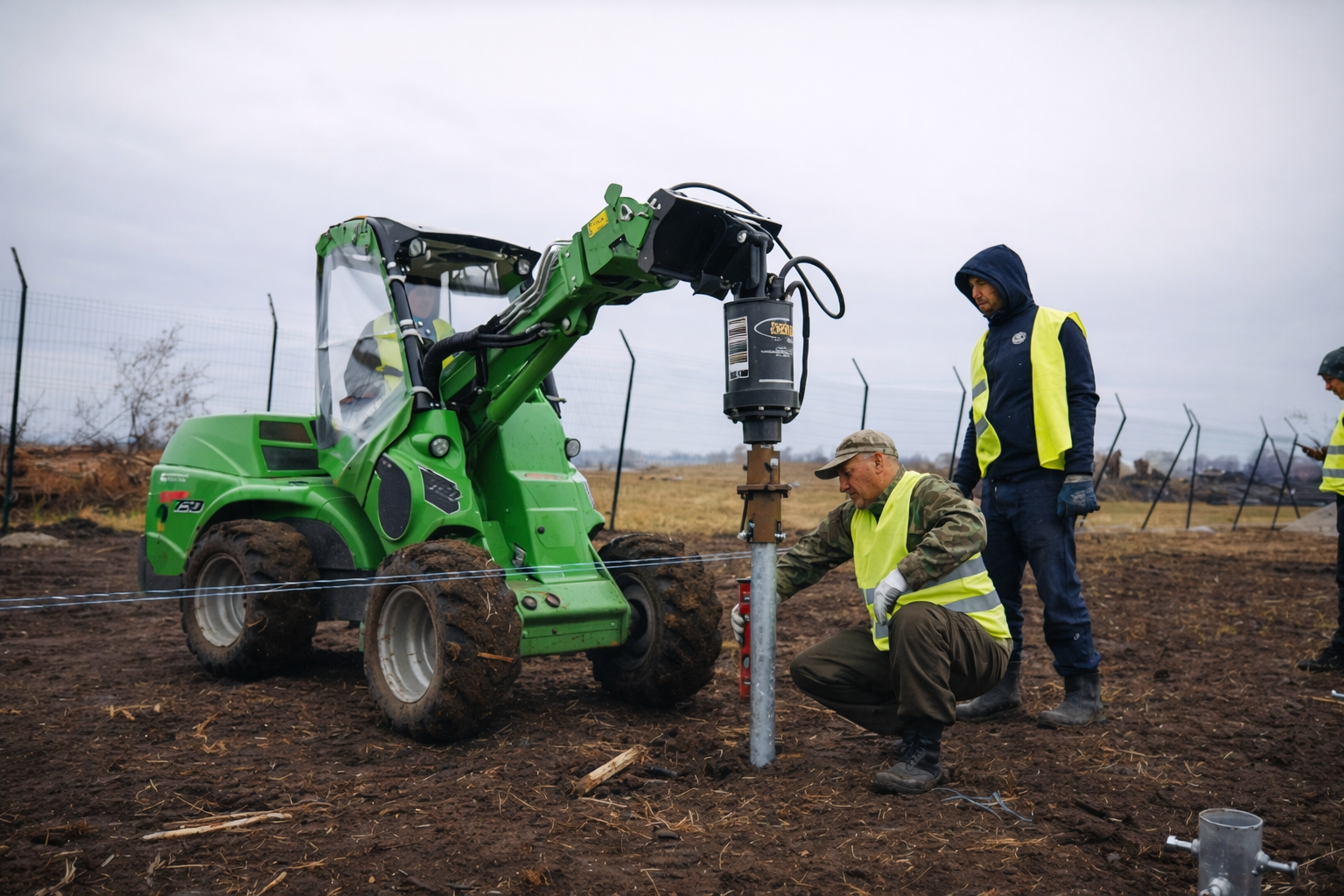
The foundation plays a key role, as it determines the accuracy of the entire structure’s geometry and the speed of project implementation.


Implementation practice
In practice, the installation of solar carports often takes place on an active site. This requires staged installation, careful logistical organization, and minimal disruption to the existing surface.
Typical engineering challenges — uneven foundations, limited space for equipment, and the need for precise positioning of supports — are addressed through prior engineering surveys and adaptive structural solutions.


Impact for the facility and users
From an infrastructure perspective, a solar carport delivers multiple benefits at once. It generates electricity, improves the parking experience, and enhances the overall attractiveness of the site.
For the owner or operator, this means reduced energy costs, increased asset value, and readiness for electric vehicle infrastructure development. For users, it provides comfort and protection for vehicles from weather conditions.

PILLAR expert conclusion
Solar carports should be considered not as auxiliary energy structures, but as full-fledged elements of modern infrastructure. Their effectiveness is determined not only by the PV system capacity but also by the quality of engineering integration into the site, traffic flows, and the facility’s energy system.
Experience from implementing such solutions shows that when infrastructure begins to serve multiple functions simultaneously, it creates additional value — both for businesses and for the urban environment.